
By Jaxson Benjamin
Content warning: mention of eugenic sterilization, surgery, and genocide.
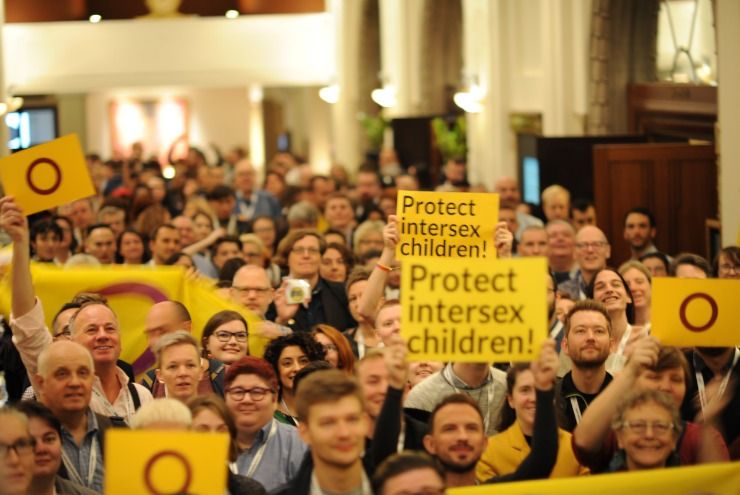
Happy October! Or more accurately, hoping you experience moments of happiness this October. Along with being known for Breast Cancer Awareness, LGBTQ History, Disability Employment, National Hispanic Heritage, and many others, this month also celebrates Intersex Awareness.
For transparency, I am not someone who is Intersex*. I’m a graduate student studying for my master’s in education in human sexuality and a disability justice activist. Health, safety, and equal rights around human sexuality is more like an obsession than a passion for me. Reproductive justice particularly pulls at me, as this human right is so frequently ripped away from many of us in marginalized communities.
Eugenic sterilization through unnecessary medical interventions has been used as a form of genocide against Black, Indigenous, People of Color, Disabled, and Intersex folks for years and still persists today. Sterilization refers to prevention of the ability to reproduce. Generally, speaking to sterilization refers to medical procedures and birth control; however, it can also occur naturally or result from a trauma to the body. The pseudoscience of eugenics rests on the idea that some humans are better than others and the human race can be “cleansed” of the less desirable traits. For those who follow this lousy excuse for spreading hate and white dominance, it’s no surprise that BIPOC and people with disabilities are at the top of the list. If images of World War II are coming to mind, you’re on the right track—Hitler’s mass murders of Jewish, Roma, queer, and Disabled people stems from this belief.
Horribly, history repeats itself. The recent exposure of mass hysterectomies unnecessarily performed and pressured onto immigrants being held at the Irwin County immigration detention center in Georgia is just one current example of how practices of eugenic sterilization are still happening today. Understanding the historical context of how these practices have been used and continue to inflict pain and death is how we learn to stop them. Knowledge is power.
The legal system plays an important role in how these hate crimes are able to occur. The 1927 US Supreme Court case Buck v. Bell sets precedent that states are legally permitted to sterilize inmates of public institutions. Individuals with “imbecility, epilepsy and feeblemindedness” were argued to be hereditary carriers of their conditions and deemed not fit to procreate by the court. Though many states overturned sterilization laws in the 20th century and the subsequent Supreme Court has undermined the reasoning used in Buck v. Bell, it is still technically upheld by the US government and serves to provide an insidious foundation for mistreatment today.
The Intersex Society of North America (ISNA) defines the term Intersex for us:
“Intersex is a general term used for a variety of conditions in which a person is born with a reproductive or sexual anatomy that doesn’t seem to fit the typical definitions of female or male. For example, a person might be born appearing to be female on the outside, but having mostly male-typical anatomy on the inside. Or a person may be born with genitals that seem to be in-between the usual male and female types—for example, a girl may be born with a noticeably large clitoris, or lacking a vaginal opening, or a boy may be born with a notably small penis, or with a scrotum that is divided so that it has formed more like labia. Or a person may be born with mosaic genetics, so that some of her cells have XX chromosomes and some of them have XY.”
Intersex anatomy is not always visible at birth. Puberty may highlight Intersex characteristics, or perhaps a blood test, or results of an autopsy after a person has passed. The point being, intersex anatomy vary and sometimes no outward characteristics develop.
A friendly reminder that gender is a social construct. Intersex is term that is defined as another social label along with women and men. In reality, we know that a spectrum of identities and body parts exist and they are all valid. How we define or interact with these labels is up to us as individuals. Gendered labels can cause great harm but can also serve some folks as points of pride and community strength.
People who are Intersex have historically experienced nonconsensual medical treatment and coercion into procedures in the name of healthcare. Surgeries, hormone treatment, and other medical interventions have been used to change what is called “ambiguous genitalia” to adhere to the binary definitions of female and male. For example, in surgeries that are designed to enhance or create a vaginal opening, the width of the canal is specifically made to be large enough for penetration, emphasizing the reverence towards traditional definitions of sexuality. Interventions have been/are frequently performed on infants, when informed consent is not possible.
The purpose of medical interventions is clearly outlined to improve the ability for reproduction, create an outlet for menstruation, prevent/reduce urinary tract infections and fecal issues, lower rates of cancer in the gonads, and provide coverage for any internal organs that are exposed. These medical issues justifiably require surgery and/or medical care. However, when surgery is performed on a person without their consent to fit them cosmetically into a binary box of female or male, this is a human rights issue. In addition to the common dangers to surgery and the trauma that can occur, surgery to the genital area can also affect sensation, the ability to reproduce, and create health issues that were not there before.
Yes, medical intervention is sometimes necessary. Knowledge sharing is also incredibly important. Redefining and reeducating how society defines gender and sex will lead to a huge shift in mental health, abuse rates, and healthcare. Now that you have this knowledge, what will you do with it?
This link will redirect you to a global list of Intersex Support and Advocacy Groups.
*Sometimes in this piece the word “intersex” has been capitalized and sometimes not. This has been done following the lead of Intersex activists (special mention of Hida Viloria and Dana Zzyym) to acknowledge the pride and self-identification of the community. The same has also been done for the word ‘disabled.’
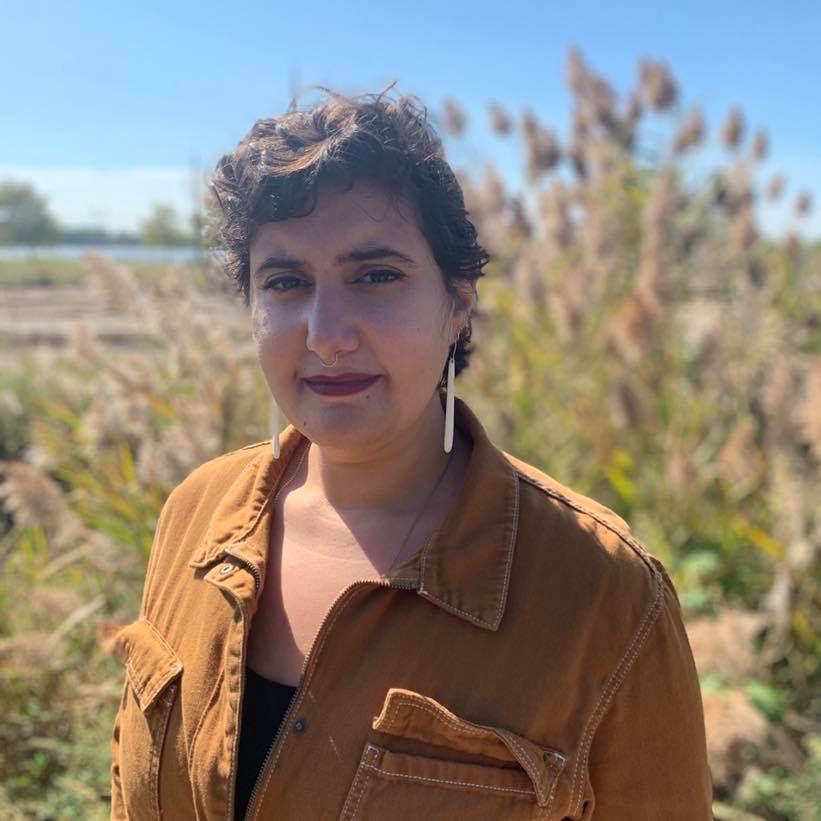
Jaxson Benjamin is a queer, disabled, social justice educator and sexologist raised on the land of the Lenni Lenape People in re-named Philadelphia. Their intersectional identities include being body neutral and holding multi-ethnic identities with Middle Eastern heritage from Sephardic and Ashkenazi Jewish lines. Jax’s work is rooted in the empathic and story-telling approaches of Community Development that aim to disrupt Eurocentric teachings. Check out their work on social media here.
Headshot Description: Jax, tan olive skin tone, short dark curly hair from the chest up looking at the camera. Wearing brown utility suit and black top underneath, with long white earrings, dark purple-ish lipstick, and gold septum hoop. Blurred tall green and tan plants and a river can be made out in the background.



No Comments