

By Jaxson Benjamin
What defines pleasure?
When I think about pleasure, muscle memories of cuddling with my dog (a rescue pittie named Daisy, scattered with black-and-white markings) wash over me. Next, I’m hit by that mind-expanding “Aha!” feeling when I learn something new that sparks connection and understanding. Other times, I think about the care bestowed upon me when someone would play with my hair or wrap themselves around my body. Touch, emotional intimacy, and energy exchange shape pleasure for me.
As someone with a compromised immune system, I have been on long-term lockdown due to COVID-19 safety concerns. That has meant, like many of us, I’ve had to redefine what pleasure means and find any moment I can to explore it.
Though joy and happiness are human rights, for B.I.P.O.C., queer, and disabled folks, pleasure has been purposefully and historically limited. Oppressive systems work to bluntly deny our physical safety through the medical and legal complexes while subversively and insidiously impacting our mental wellbeing. Making space for joy is a privilege in a world where food, shelter, and safety from police violence are commodities. For those with these privileges, we still contend with mental health conditions and powerful stressors from the society in which we live.
When looking at sexuality and pleasure, we know that those with marginalized identities experience over-sexualization and minimization of their pleasure needs. Stereotypes, traditional sexual scripts, and reductive social narratives depict queer, B.I.P.O.C., and disabled folks as hyper-sexual beings or infantile. Our sexuality is diminished in this way, impacting self-love, self-respect, and therefore, many facets of our enjoyment.
Enjoyment of sexual pleasure is liberation from traditional puritanical ideologies that aim to limit self-expression. Societal norms, like the notion that women should have a limited number of sexual partners (or none at all until marriage), simplify and deny the human experience. These ideals are imposed upon us in common troupes like the sultry vampire (a.k.a. sexiness is evil). Sexual exploration and confidence is used as a cautionary tale.
The newly updated terms of use by Instagram via Facebook are less subtle when it comes to devaluing and attacking sexuality and pleasure. In the words of petition organizers, as of December 20, 2020, “Instagram have recently stated that they do not allow or facilitate sexual encounters between adults on the platform. However, a lot of the nudity and sexual references Instagram ban - e.g. strip club shows, erotic dances, references to arousal or pointing users to other platforms such as OnlyFans - do not facilitate sexual encounters. They are merely self-expression, education or, sometimes, direction to take those encounters elsewhere. We ask the platform to be more inclusive of nudity and sexuality, to allow marginalized communities to still earn a living during the pandemic, to educate young people and to allow self-expression.”
Joy and sexual pleasure should be ours to define and play with. That means that, for some, limited sexual experiences is what feels right and brings contentment. For others, expanding understandings of pleasure to include new hobbies, like making art, can promote delight. Whatever it means to you, constructing space for your pleasure should be free of judgment, censorship, or pressure—from society and our own internalized cop.
Unlearning social norms for how we define pleasure and happiness is radical. To recognize that a set path doesn’t fulfill you is rebellious. Taking pieces and parts from what brings you bliss to design your own surroundings is inherently revolutionary as you are shaping something new.
Here, again, it is essential to acknowledge privilege. Radical work is consuming and looks different for different folks. So many variables, from your body’s natural cycling to your realities and responsibilities as a citizen, friend, or family member, will result in how much energy you can put into this work. To me, this understanding is part of self-care, and as Elisa Wong explains, collective care.
“Caring for myself is not an act of self-indulgence, it is self-preservation, and that is an act of political warfare.” —Audre Lorde, 1988
Lorde’s lived experience as a Black, lesbian feminist and her work to dismantle the systems of white supremacy culture prioritized addressing the hierarchical systems that breed harm with remedies focused on community development. The concept of self-care for Lorde meant taking care of yourself so you can support your community.
Slate writer Aisha Harris explains that the history of self-care began with a medical term used by doctors in the ‘60s when referring to ideals imposed on patients around “healthy habits,” especially those in the disabled community who did not have autonomy while in supervised medical facilities. Along with other Black feminists, Lorde’s interpretation of self-care acts to decolonize the concept by proclaiming the importance of self-determination in the non-Black, non-women centric medical structure.
Considering the intersection of self-care and pleasure can be game-changing. When moments of self-care, like organizing or recuperating, are met with joy, a synergic and fruitful practice can start to form. More enjoyment and less discomfort can promote exploration and healing. Learning our needs as individuals can help make space for a shift in mindset and more room for community empowerment. Additionally, pleasure, like self-caress, is part of self-care. Community gathering together (whether in person, virtually, or spiritually) is full of care and celebration, and even in hard times, we honor each other.
Pleasure and joy nourish us. Happiness shapes who we are; reminds us what matters; why we do the things we do. How we cultivate pleasure may, at times, come naturally, and in other instances, may require attention. Our happiness is important, as individuals and as community members. Examining, questioning, and promoting inclusive ways for how we engage with pleasure is rebellious.
What will you make and who will you share it with?
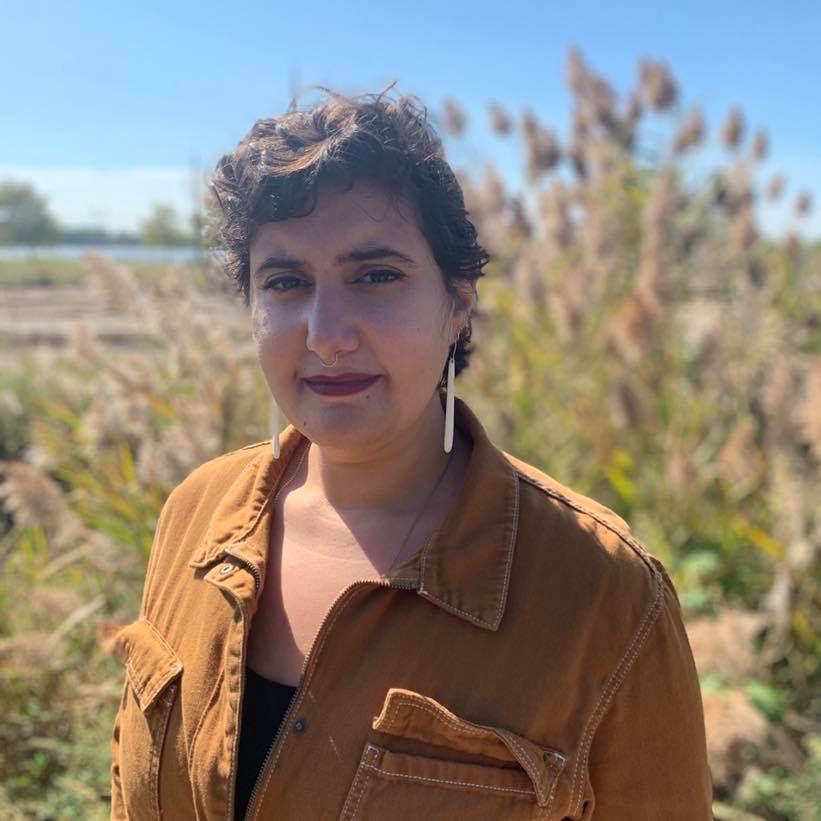
Jaxson Benjamin is a queer, disabled, social justice educator and sexologist raised on the land of the Lenni Lenape People in re-named Philadelphia. Jax’s work is rooted in the empathic and story-telling approaches of Community Development that aim to disrupt Eurocentric teachings. Check out their work on social media here.
Headshot Description: Jax, tan olive skin tone, short dark curly hair from the chest up looking at the camera. Wearing brown utility suit and black top underneath, with long white earrings, dark purple-ish lipstick, and gold septum hoop. Blurred tall green and tan plants and a river can be made out in the background.